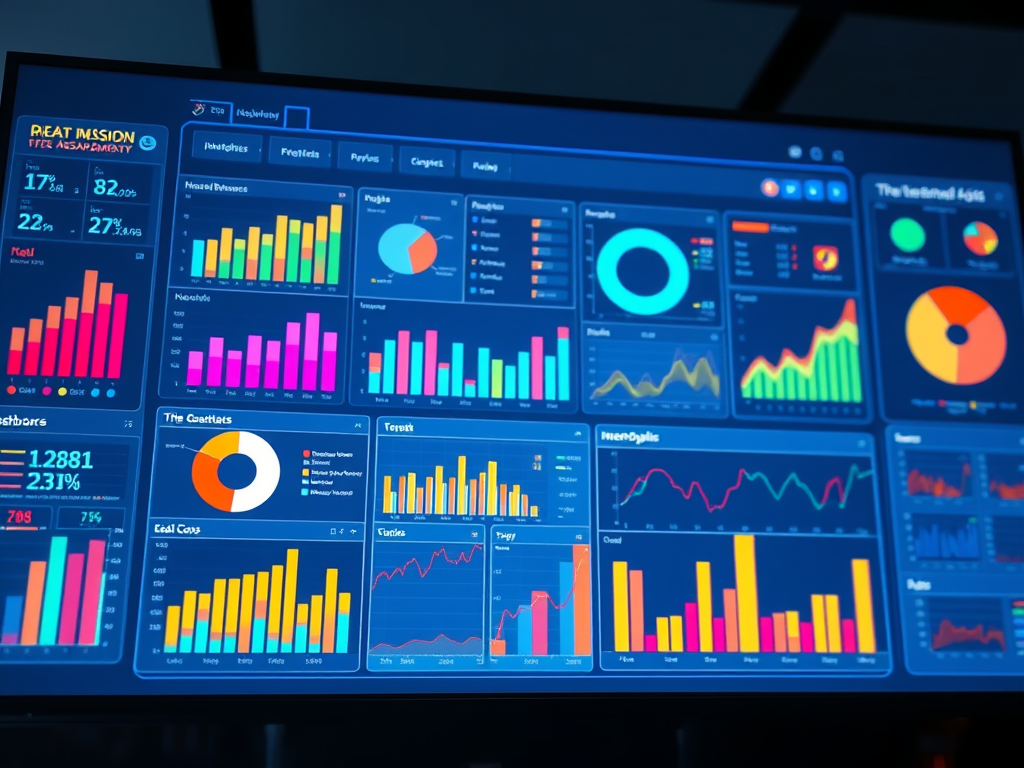
ESG dashboards are the new confessionals of corporate virtue—interactive, data-driven, and reassuringly sterile. The pitch is simple: transparency builds trust. The reality is murkier. Behind every luminous bar chart and confidence-inspiring gradient lies a series of selective choices—what to measure, how to frame it, and what to quietly omit.
Transparency, it turns out, is not a light switch. It’s a dimmer, and corporations control the voltage.
Key Takeaways
- Transparency is not absolute—it’s curated.
- Dashboards often obscure complexity under the guise of clarity.
- The illusion of transparency breeds misplaced confidence.
- ESG data can both illuminate and manipulate.
- True insight demands context, not cosmetics.
The Seductive Promise of Visualization
Good data visualization feels like magic. Complex systems distilled into elegant simplicity. The problem is—it is magic, complete with misdirection. The more seamless a dashboard looks, the less you’re encouraged to ask how the trick works.
We worship these visuals because they make chaos look conquerable. But clarity without context is a mirage. The pie chart becomes a pacifier. The heat map, a placebo for complexity.
The illusion isn’t malicious—it’s mechanical. Algorithms favor what’s legible, not what’s true. And so, we confuse comprehension with understanding.
Transparency: The PR Mirage
Once upon a time, transparency meant honesty. Now it’s a marketing strategy with better fonts.
Within ESG reporting, “transparency” has become shorthand for “don’t worry, we’ve got this.” Companies showcase dashboards brimming with sustainability metrics while quietly omitting inconvenient ones. The result: a spectacle of openness that conceals more than it confesses.
This isn’t deception—it’s choreography. Numbers are positioned, not presented. Stakeholders see what they’re meant to see: a performance of accountability.
When Dashboards Fail (and Why They Do)
Corporate dashboards promise insight but often deliver theater. They’re designed to please executives, not inform them.
Beneath the glossy interfaces sit vanity metrics—those shiny, meaningless numbers that flatter performance while dodging impact. “Engagement,” “reach,” “awareness”—metrics that tell a comforting story and nothing more.
The most important measures of progress—trust, equity, cultural change—don’t fit neatly into pie slices. And so they’re ignored in favor of what can be plotted and prettified.
“The most important things are the hardest to measure.” —Unknown
The Green Veneer of ESG
ESG dashboards are the corporate world’s conscience in PowerPoint form. They project care, responsibility, and virtue—all conveniently quantified.
But the same dashboards that trumpet diversity ratios and carbon offsets often skip the messy bits: labor violations, supply chain issues, community displacement. The omissions are the story.
“The most important thing in communication is hearing what isn’t said.” —Peter Drucker
The selective glow of ESG metrics is not transparency—it’s staging. Until companies show the full picture, dashboards remain décor, not disclosure.
The Psychology of Illusion
Design shapes perception. A well-placed benchmark or color gradient can make mediocrity look like momentum.
Enter the anchoring effect: show an impressive baseline, and everything after seems acceptable. Dashboards are full of such psychological sleights—unintentional or not—that shape how stakeholders feel about performance.
Bias in visualization isn’t just a technical flaw; it’s a form of persuasion. And persuasion, masquerading as transparency, is its own ethical problem.
The Transparency Paradox
The more data we have, the less we understand.
Edward Tufte once said, “The most important thing in the design of information is the way it is used.” Yet most dashboards drown the signal in noise. In the rush to show everything, clarity dies by overexposure.
The deluge of ESG metrics doesn’t reveal more—it numbs. We scroll, click, and nod, mistaking data density for depth. Transparency turns opaque under the weight of its own excess.
“The goal is to make data speak, not to drown in its abundance.” —Unknown
Beyond the Dashboard: Toward Authentic Transparency
Real transparency isn’t a dashboard; it’s a dialogue.
As Don Norman put it, “Transparency is not about showing a lot of data—it’s about showing the right data.” That means context, contradiction, and the courage to admit what’s unfinished.
True transparency invites scrutiny, not applause. It exposes the machinery of decision-making—the why, not just the what. It’s uncomfortable, slow, and impossible to summarize in a single visualization.
The Ethics of Visualization
Every chart is an argument disguised as an image.
The ethics of data visualization begin with intent: Are we revealing truth or shaping perception? Presenters carry a moral responsibility to resist distortion, no matter how elegant the design.
“The greatest value of a picture is when it forces us to notice what we never expected to see.” —John Tukey
The test of an ethical visualization isn’t how pretty it looks, but how honestly it confronts the messy parts of reality.
From Illusion to Illumination
Transparency isn’t a product feature—it’s a practice. If dashboards are to mean anything, they must evolve beyond the aesthetic of clarity into the discipline of truth.
That means fewer vanity metrics, more uncomfortable data. Fewer color gradients, more context. Fewer promises, more proof.
The next generation of ESG tools should stop pretending to reveal everything and start revealing what matters. That’s not transparency as performance—it’s transparency as accountability.
Post Mortem: Transparency, Cause of Death
Time of death: indeterminate—somewhere between the first ESG dashboard rollout and the fiftieth quarterly sustainability report that looked exactly like the last one.
Cause: Overexposure to data without context. Transparency suffocated under layers of performance metrics, corporate gloss, and the delusion that visualization equals virtue. The patient displayed all classic symptoms: bright color palettes, strategic omissions, and terminal PowerPoint fatigue.
Contributing factors: chronic vanity metrics, untreated PR spin, and a fatal dependence on investor reassurance. Stakeholders mistook the heartbeat of authenticity for the flicker of animated infographics.
Surviving relatives: “Accountability,” currently on life support, and “Trust,” whereabouts unknown.
Prognosis: guarded. Resuscitation is possible through radical honesty, messy context, and metrics that reflect consequence, not cosmetics. Until then, transparency remains another corporate ghost haunting the dashboards it once inspired.
Linked Sources:




 Measurably Cynical
Leave a comment